

Key takeaways
- Shopify brands can grow through both direct-to-consumer sales and wholesale relationships with retailers.
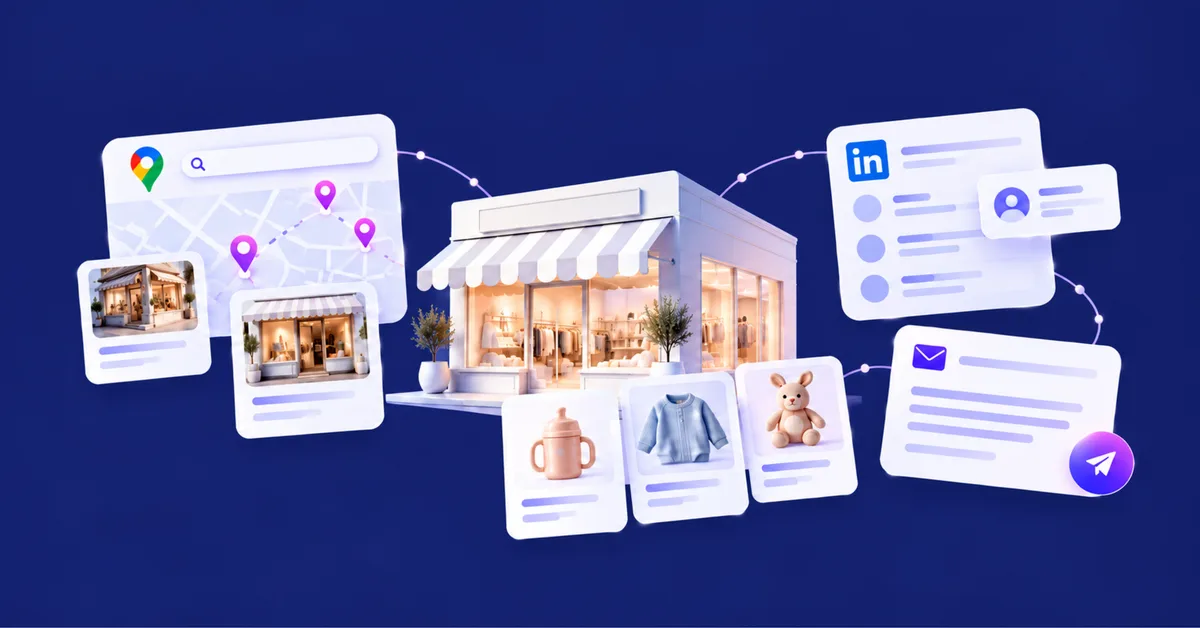
- Google Maps research can help discover local independent stores; LinkedIn can help identify retail companies and relevant buyers.
- ADIGI360 collaborated with Octobre Marketing for guidance on retailer sourcing, prospect segmentation and outbound outreach.
- Measure qualified retail conversations, new wholesale accounts and repeat orders, not just messages sent.
Why DTC is only part of the opportunity
Paid media and e-commerce conversion optimization are central to many Shopify growth plans. Yet some brands also sell through independent boutiques, specialty stores and larger retail chains. Wholesale can complement online acquisition by expanding physical availability and creating recurring commercial relationships.
A brand such as Brume, whose gloves are sold at Simons, illustrates the broader distribution model. This example is not presented as an outcome of the outreach initiative.
 octobre.
The collaboration with Octobre Marketing
ADIGI360 worked with Octobre Marketing to explore how B2B prospecting could support Shopify brands seeking retail distribution. Octobre Marketing advised on approaches to discovering potential stockists, researching decision-makers and structuring targeted outbound campaigns. ADIGI360 contributed its understanding of e-commerce positioning, product categories and acquisition strategy.
Finding local retailers with Google Maps
Google Maps-based research and scraping can surface independent boutiques and specialty stores by location and category. A brand can start with its target cities and search for store types aligned with its product, price point and customer. Candidate stores still require manual qualification: a map listing does not establish wholesale interest or purchasing capacity.
When collecting business information, teams should respect applicable privacy rules, platform terms and data quality requirements.


Finding retail buyers through LinkedIn
LinkedIn can help research retail chains, company structures and potential purchasing contacts. For independent stores, the owner may make buying decisions; for larger retailers, the relevant contact might be a buyer, category manager or purchasing director. Roles and contact details should be verified before outreach.
From retailer list to outreach sequence
The proposed workflow connects retailer discovery, qualification, contact research, tailored cold email and LinkedIn outreach, and follow-up. Messaging should explain the product fit and wholesale proposition, rather than relying on generic lead-generation copy. Replies and meetings are intermediate signals; a retailer account or purchase order is the more meaningful commercial outcome.

Why one retailer can matter
A retailer relationship may generate an initial wholesale order, distribution in multiple locations and replenishment purchases. The economics differ from DTC: lower wholesale margins, inventory requirements, payment terms and sell-through risk must be assessed. A large store count is not itself proof of profitable growth.
How to measure retail outreach
Use a simple funnel that distinguishes sourcing activity from business results. The initiative described here does not yet include verified campaign outcome figures.
| KPI | Definition | Limitation |
|---|---|---|
| Qualified retailers | Stores matching geography, category and brand fit | Research does not confirm buying intent |
| Positive reply rate | Relevant positive replies / delivered messages | Not equivalent to a purchase order |
| Buyer meetings | Conversations with verified decision-makers | Meetings may not convert |
| New wholesale accounts | Retailers opening a commercial account | Account opening may precede revenue |
| Wholesale revenue | Attributed purchase orders and repeat orders | Allow for returns, terms and margins |
Practical constraints and limits
Google Maps listings can be outdated or duplicated; LinkedIn job titles may not reflect buying authority. Automated collection and outreach require care around privacy, consent, deliverability and platform rules. Retail distribution also depends on product-market fit, wholesale pricing, stock availability and the ability to fulfill orders.
Frequently asked questions
Is B2B outreach relevant to a Shopify-only brand?
Potentially, if the brand has products suitable for resale and the margins and operations to support wholesale.
Can Google Maps identify every relevant retailer?
No. It is useful for local discovery but should be complemented by other research and qualification.
Does a positive LinkedIn reply mean a new retailer?
No. Track the full path from response to qualified discussion, account opening and actual orders.
What did Octobre Marketing contribute?
Strategic guidance on retailer discovery using Google Maps, identifying potential buyers through LinkedIn and developing an organized B2B outreach approach.